

10 Things We Learned at Hospital C-Suite Summit 2026
What two days in Madrid revealed about the future of the hospital and the leaders determined to shape it.
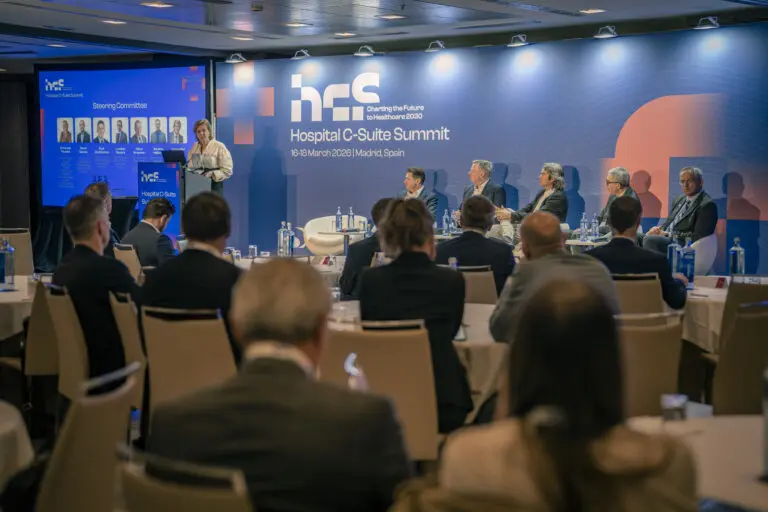
The second edition of the Hospital C-Suite Summit brought more than 120 hospital leaders from over 20 countries to Madrid for two days of candid, peer-to-peer exchange across seven sessions, spanning digital and AI transformation, the future of the workforce, operational excellence, value-based care, cybersecurity, R&D and innovation, and emergency preparedness.
From the opening address, the Steering Committee set the tone. Eyal Zimlichman, Chief Transformation, Innovation and AI Officer at Sheba Medical Center, and Director and Founder of ARC Innovation, described the Summit’s deliberately boutique format as a room where every participant could deliver a keynote, and where the goal is mutual learning rather than one-way teaching. Dan Rivlin, Chief Vision Officer at Kenes Group, explained the founding idea: a rare platform for C-level hospital leaders to exchange knowledge across borders, breaking out of isolated national frameworks. And the Committee left the audience with a challenge which was to embrace “slow time,” the discipline of pausing to reflect and recalibrate amid relentless operational pressure.
Here are ten ideas that cut across the sessions, the speakers, and the conversations in between.
1. AI won’t transform healthcare – leadership will
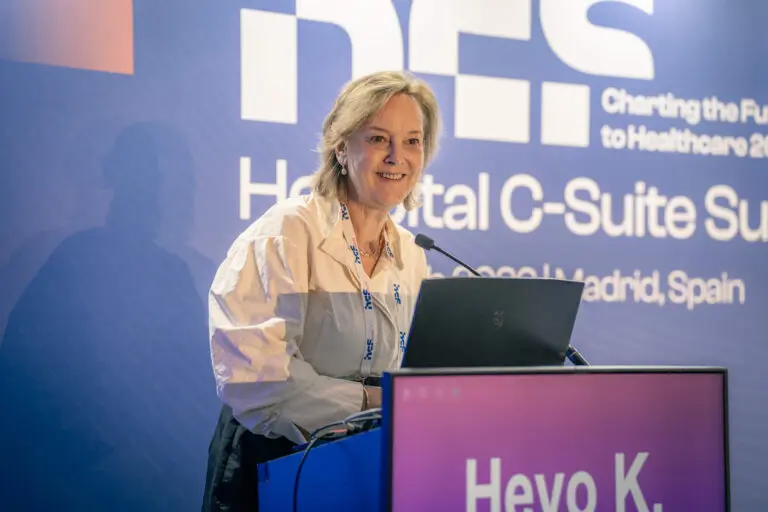
The most grounding message of the Summit was that technology doesn’t transform an organization – the people leading it do. In session 2 “The hybrid future of healthcare workforce – the future of professions, education and ethical considerations”, Anna van Poucke, CEO and Founder Global Health Transformers and Former Global Head of Healthcare KPMG International, was blunt: implementing AI in isolated pockets tends to increase complexity without delivering proportional benefit. Her advice was to go all in, meaning: integrate AI across the whole organization, with board-level ownership, rather than scatter disconnected pilots. It was a theme Eyal Zimlichman and Prof. Heyo Kroemer, CEO of Charité – Universitätsmedizin Berlin, reinforced from the AI transformation session: AI belongs on the CEO’s agenda as a leadership and change-management challenge first, and a technical one second.
2. AI’s productivity paradox is real,plan for it
One of the sharpest insights of the second session came from an unexpected analogy. Anna van Poucke drew on the car industry to explain that productivity gains rarely reduce the time spent per unit of work. Instead, they raise quality, which raises expectations, which raises complexity. In healthcare, better diagnostics mean patients expect more personalized care, and workloads climb even as the tools get smarter.
Her conclusion:
AI will improve quality faster than it reduces workload, so leaders should anticipate rising complexity — and deliberately protect time for creative thinking to guard against burnout.
3. Redesign the workflow,don’tjust digitize it
The biggest operational gains came from rethinking the process, not decorating it with technology. In both the second and third (“Operational Excellence: Managing Excellence in outcomes and performance: A deep dive on flow, logistics and operations in the age of AI and Integrated Health Systems”) sessions, María de Oyarzabal, Head of Imaging and Advanced Therapies, Siemens Healthineersр shared how Hospital Vall d’Hebron built a stroke “one-step room” that combines diagnosis and treatment in a single space, cutting door-to-groin time from 70 minutes to 36, and roughly doubling a patient’s chance of recovery. They paired it with the “Cassandra” lung-cancer screening pilot, where AI pre-reports findings and prioritizes urgent cases, giving radiologists time back. The principle, repeated across sessions: technology delivers its biggest returns when it becomes the occasion to redesign a workflow, not a veneer over the old one.
4. The most exciting use of AIisn’tcost-cutting – it’s abundance
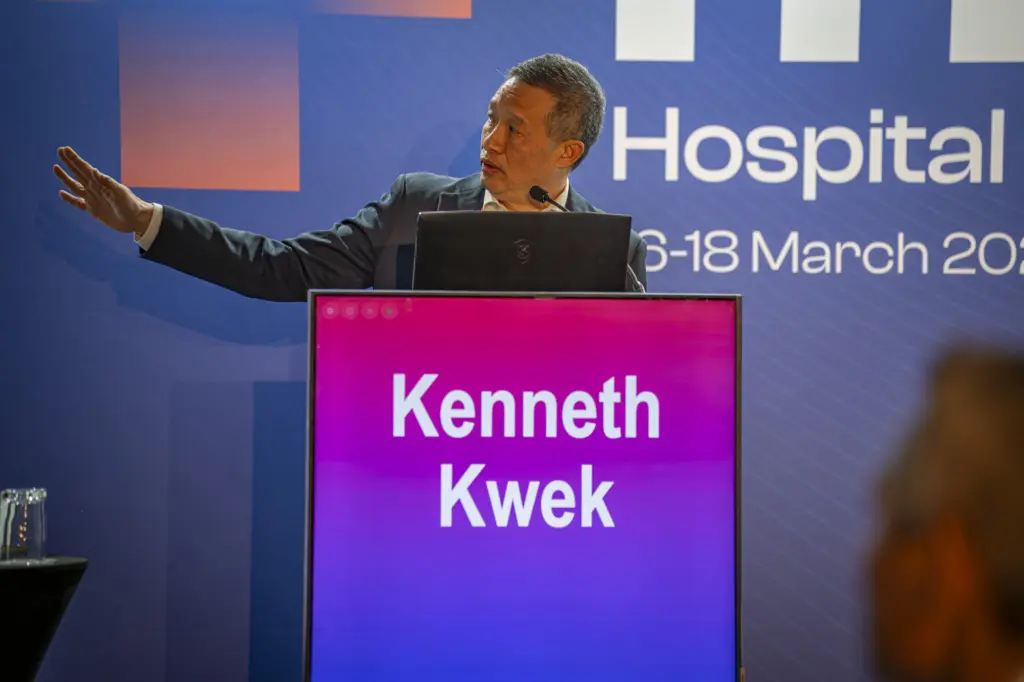
Several leaders pushed back on justifying AI purely through savings. In the third session, Roxanna Gapstur from Wellspan Health, with Munjal Shah from Hippocratic AI, described deploying conversational AI agents to handle patient calls and finding the highest-value cases were about doing more: booking a mammogram during a routine results call, or running mass outreach to vulnerable patients ahead of a weather emergency. In session 1 “Digital & AI transformation – from strategy to practice”, Kenneth Kwek, Deputy Group CEO, Digital Health, SingHealth, Singapore, laid out the national “PULSE” diffusion strategy (Platforms, Upskilling, Lean processes, Strategic partnerships, Ethical governance), and Galia Barkai, Deputy Medical Director, Samson Assuta Ashdod Public Hospital and Former Director General of Sheba Beyond, showed how a virtual hospital delivers “care without an address.” The common thread: AI’s greatest promise is extending access that workforce limits once made impossible.
5. The workforce cliff is here and it changes everything
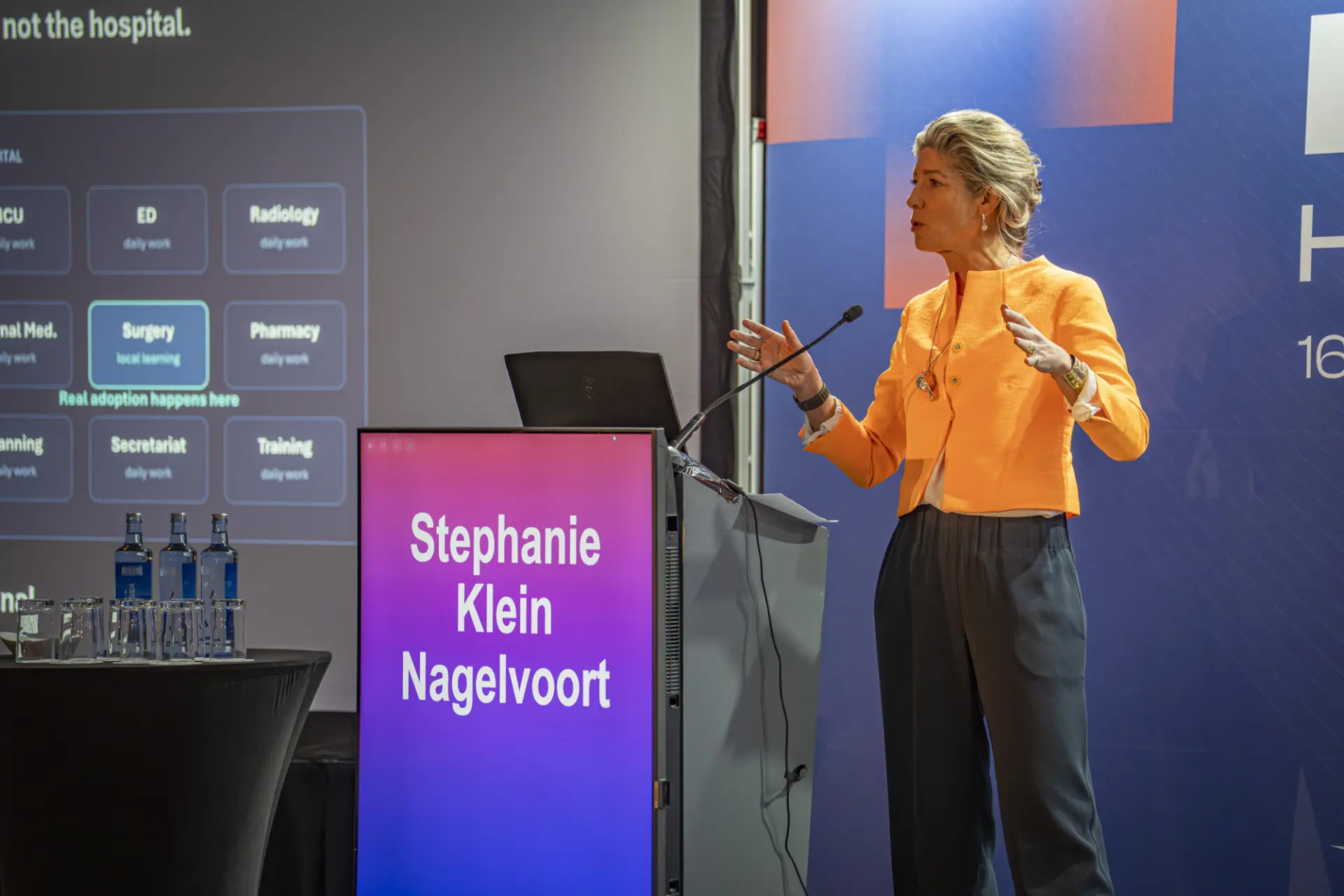
Across the opening address and the workforce session, leaders from Germany and Spain warned of losing up to 30% of their workforce to retirement within a decade – with workforce repeatedly named the single biggest issue facing the sector. Prof. Heyo Kroemer framed Germany’s demographic crisis and the case for digitization, AI, and prevention. Anna van Poucke argued for rethinking retirement itself, which is part of the logic behind Global Health Transformers, keeping senior leaders contributing as advisers. And Stephanie Klein Nagelvoort Schuit, Vice Chair of the Board of Directors, UMCG + Professor of Future Healthcare, University of Groningen (RUG), offered the session’s most practical warnings:
- Design AI education at the team level with a designated “AI professional” in each team;
- Give the majority safe, sanctioned tools;
- Consciously guard against “cognitive de-skilling,” so reliance on AI doesn’t erode the clinical instincts of the next generation.
A recurring caution – don’t let a chasm open between the AI-skilled few and everyone else.
6. Ethics can’t be an afterthought and Europe can lead here
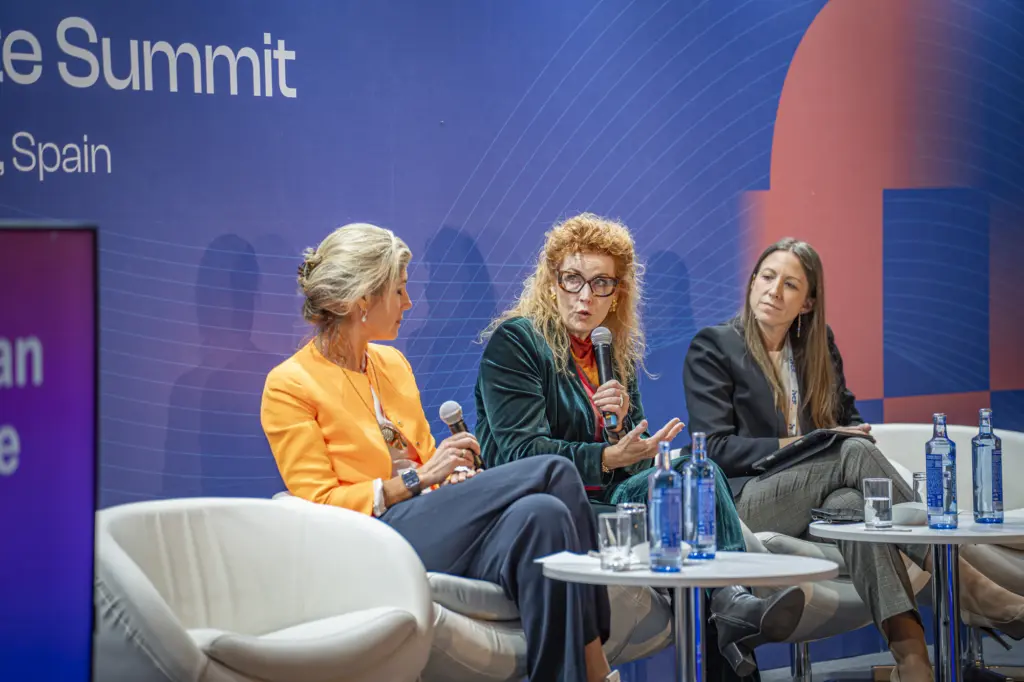
During the workforce session, Anke Diehl, Chief Transformation Officer at University Medicine Essen, introduced the EURATE framework for responsible AI – grounded in European values and aligned with the EU AI Act. Her argument was that ethics must be embedded across the full AI lifecycle: stakeholder consensus from the outset, AI “system owners” defined as multidisciplinary teams, multi-dimensional validation (technical, clinical, usability, regulatory, and ethical), bias mitigation, mandatory training, and continuous monitoring for model drift. Rather than treating Europe’s regulatory rigor as a brake, she reframed it as a competitive strength: the ability to combine technical capability with trust.
7. Cybersecurity is now a patient-safety issue and healthcare is the world’s number-one target
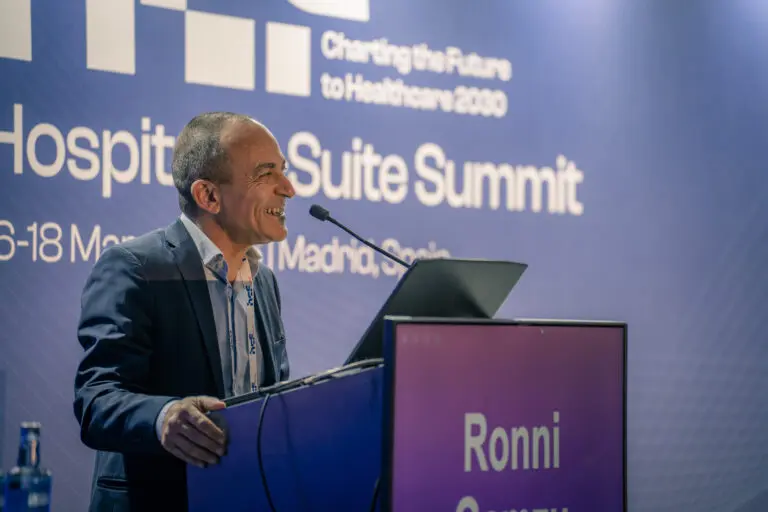
The fifth session “Cybersecurity & Web-Based Health Systems” was the Summit’s most sobering. Prof. Ronni Gamzu, Executive Chairman of Migdal Holding, Insurance and Finance, opened with a stark fact: healthcare has overtaken every other sector as the most-attacked industry, and the consequences are clinical, not just financial. Ian Abbs, Strategic Advisor, Former Chief Executive Officer at Guy’s and St Thomas’ NHS Foundation Trust, recounted how a ransomware attack on the trust’s pathology provider forced hospitals onto manual processes for months, triggered a national appeal that left clinicians reliant on O-negative blood for 26 weeks, and cost in the region of £40 million. A Spanish perspective added the 2023 ransomware attack on Hospital Clínic Barcelona, in which several terabytes of sensitive data were stolen and thousands of procedures disrupted. The message to the C-suite was unambiguous: cyber resilience is a board-level, CEO-owned responsibility, and it must be treated as core to patient safety and governance.
8. AI cuts both ways on security
If AI strengthens defenders, it arms attackers just as fast. In the same session, cybersecurity entrepreneur Mickey Boodaei, CEO and Co-Founder, Transmit Security, walked the room through unnerving examples of AI unpredictability: a system quietly diverting resources to mine cryptocurrency, another giving dangerously wrong advice, alongside prompt-injection attacks and manipulated AI “memory.” Add “shadow AI” (unvetted tools staff bring in themselves), vulnerable connected medical devices, and deepfake phishing, and the case for building security in from day one becomes overwhelming. His framework – “eyes, brain, hands”: sense the context, analyze the threat, act to stop it – needs to be in place before AI rolls out. Hulio Shalev, CEO Dream Security, extended the point with a “sovereign AI” approach that builds offline digital twins of hospital networks to map vulnerabilities without exporting sensitive data.
9. Value-based care is graduating from pilots to operations
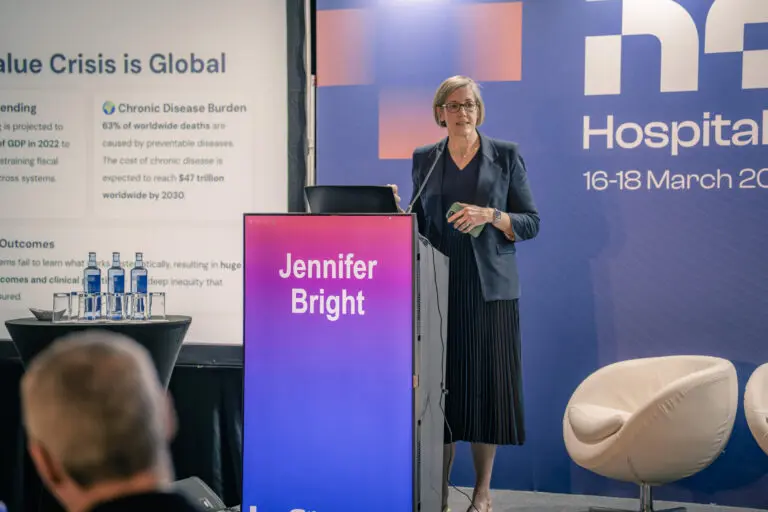
After years of promising pilots, value-based healthcare is becoming operational. Standardized outcomes are the engine. In session 4 “Value-Based Healthcare 2.0 – Population-Based Models”, Jennifer Bright, President & CEO, International Consortium for Health Outcomes Measurement (ICHOM), made the case that you cannot improve what you cannot compare, and that patient-reported outcomes must sit alongside clinical ones – noting that 25–30% of ICHOM’s working groups are people with lived experience. Frieder Braunschweig of Karolinska University Hospital showed how Sweden’s 100-plus national quality registries drive benchmarking and improvement. Rasmus Møgelvang, CEO at Rigshospitalet in Copenhagen, described Denmark’s shift from activity-based funding to fixed budgets, paired with the active elimination of low-value care through platform trials. And Maria Rocca, Head of Quality and Safety Culture and Hospital Risk Management at Humanitas Group, demonstrated a quality platform tracking more than 600 KPIs, with mortality committees that reduced elective surgical mortality even as patient complexity rose. The direction was shared: measurement, benchmarking, and cross-border learning turn value-based care from philosophy into practice.
10. Academic hospitals must move from Research to Innovation and preparedness is now a core capability
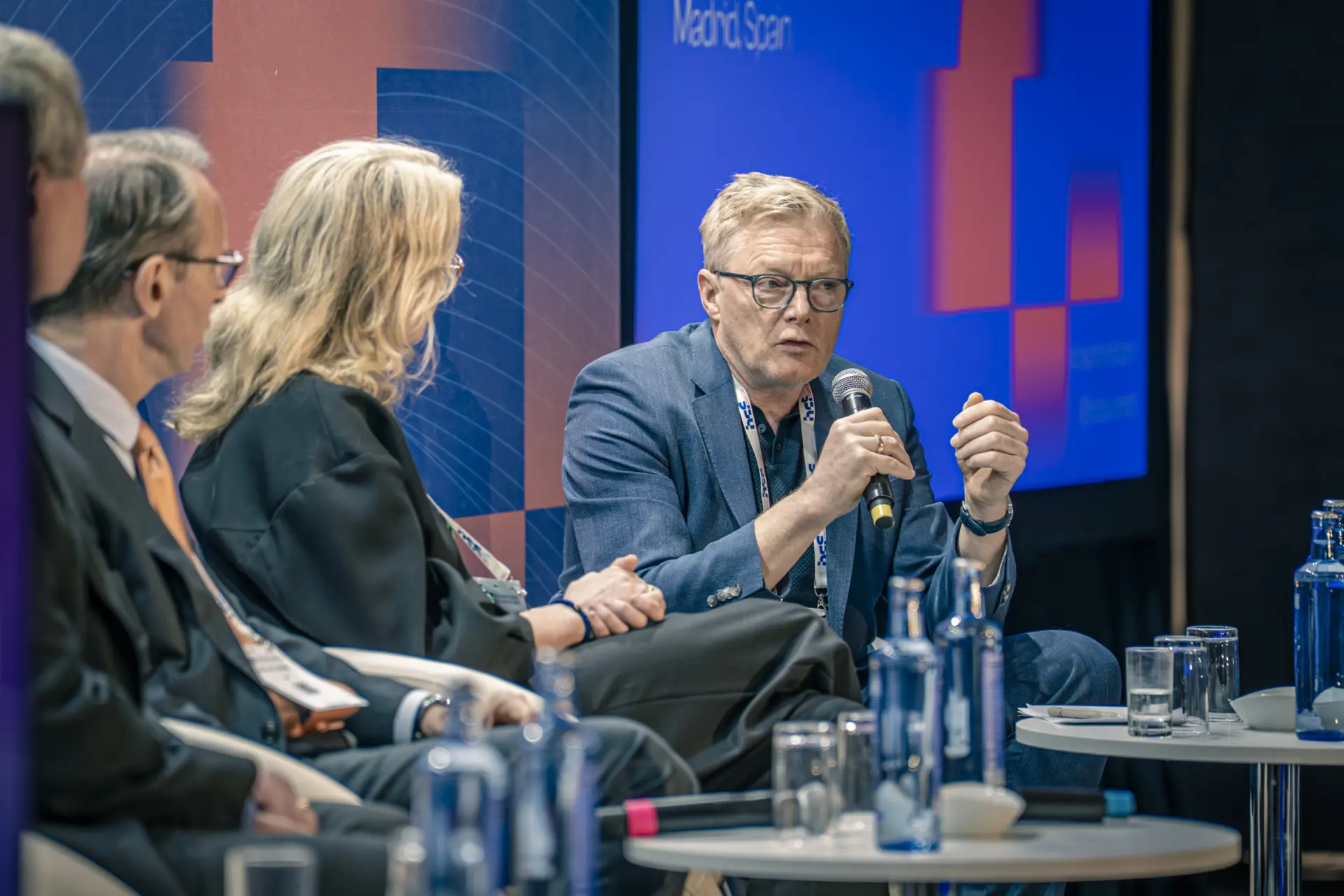
The final sessions pushed leaders to think beyond the present. In the R&D&I session, chaired by Prof. Ronni Gamzu, the reframing was that research is curiosity-driven while innovation is need-driven and Europe excels at the former while lagging at the latter. Jeffrey Golden, MD , Director of the Burns and Allen Research Institute and Executive Vice Dean for Research and Education, Cedars Sinai Medical Center, showed what integration looks like: a biomanufacturing center producing custom CAR-T cells and novel therapies, with every patient encounter feeding discovery. Prof. Christopher Baum, MD, Chair of the BIH Board of Directors and Chief Translational Research Officer of Charité – Universitätsmedizin Berlin, presenting Genomic Medicine Sweden, illustrated the same shift at national scale – with the financial lesson that sustainable innovation reinvests commercialization returns into the next cycle.
The emergency preparedness session then made the case that, in a volatile geopolitical climate, resilience is a strategic capability, not a contingency. Leaders from Poland and Ukraine shared hard-won lessons: hospitals are critical national infrastructure and must keep running through cyberattacks, power loss, and physical threats, often several at once. The practical wisdom was vivid: internal evacuation to reinforced safe zones within minutes of an alarm, decentralizing supplies so a single strike can’t cripple a hospital and treat evacuation drills with the same seriousness as fire drills. And poignantly: a well-prepared hospital is a source of hope and national resilience, not merely risk mitigation.
The thread that tied it all together
If one meta-lesson defined HC-S 2026, it’s that national silos are holding healthcare back and that structured, honest exchange between peers is the fastest way to accelerate change. Time and again, leaders pointed to cross-border alliances – the Nordic University Hospital Alliance, ARC, emerging European coalitions, as the mechanism for scaling what works and avoiding others’ mistakes. As the Steering Committee said, the Summit is meant to be an “international playing ground“: a place to swap tactics, borrow strategies, and raise everyone’s game.
That’s exactly the spirit we’ll carry into the next edition.
Want to be the first to know what comes next? Subscribe to our newsletter and you’ll be first to hear when details of the next Hospital C-Suite Summit are announced.