Share this article on Social Media:
At the Hospital C-Suite Summit 2026, session 2 “The hybrid future of healthcare workforce – the future of professions, education and ethical considerations” delivered an uncomfortable truth: the staffing crisis facing hospitals cannot be hired away. With a generation of professionals approaching retirement and AI reshaping every role, leaders were urged to rethink work itself: how it is designed, taught, and shared between humans and machines.
If Session 1 asked how to put AI into practice, Session 2 asked a harder question: who will actually deliver care in the years ahead, and how will their jobs change?
The mood was candid. Across every presentation, one theme held: technology alone solves nothing if the workforce isn’t redesigned around it.
A Paradox Leaders Can’t Ignore
Opening the session, Anna van Poucke, Former Global Head of Healthcare KPMG International; CEO and Founder Global Health Transformers, The Netherlands, punctured a comforting assumption that AI will simply lighten the load.
Drawing a parallel with the automotive industry, she explained a paradox: productivity gains rarely reduce the time spent per task. Instead, they raise quality, which raises expectations, which raises complexity. In healthcare, better diagnostics mean patients expect more personalized care, and workloads climb even as the tools get smarter.
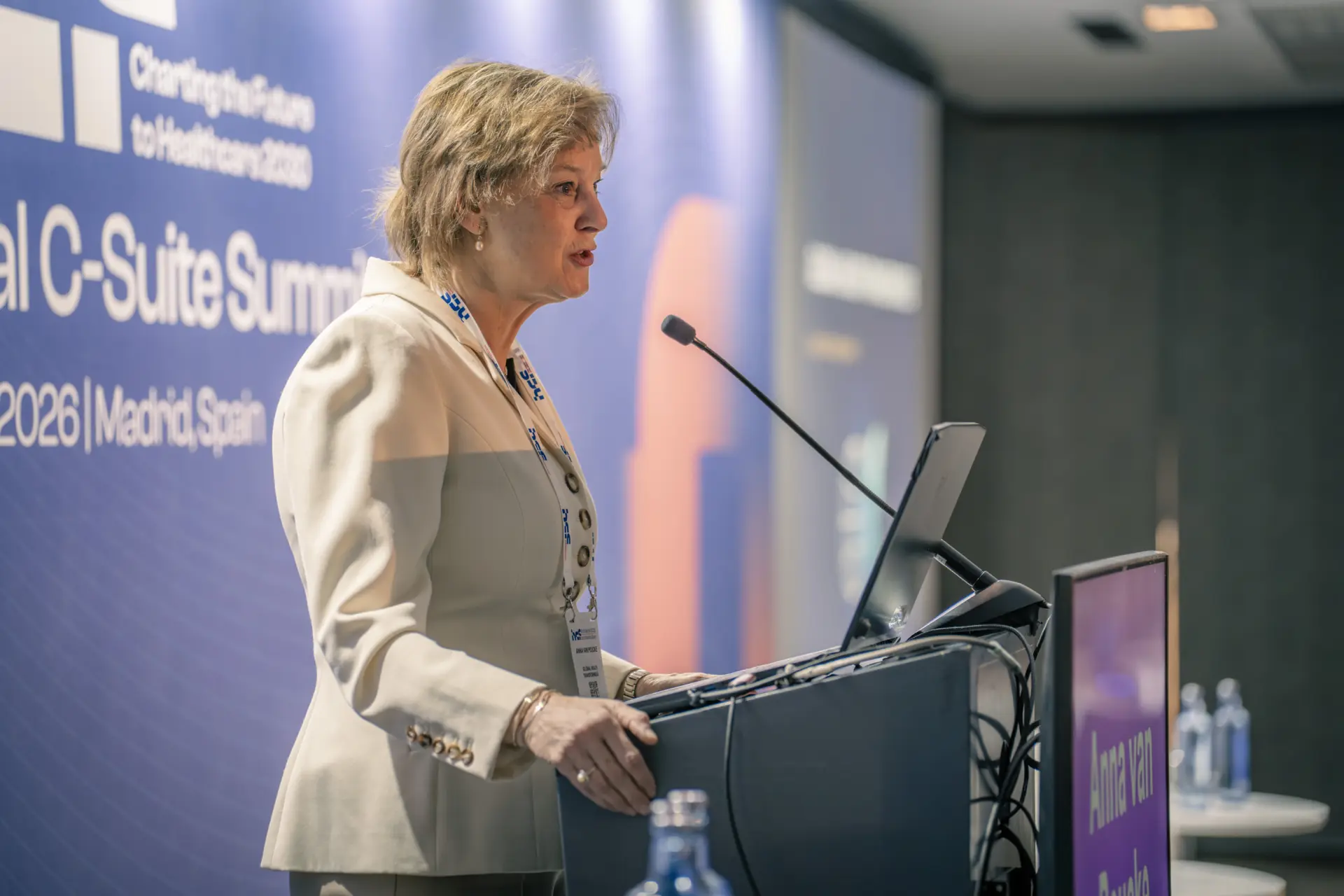
Her prescription was threefold: go all in on AI rather than scattering isolated pilots, protect deliberate “slow time” for creative thinking to guard against burnout, and treat patients themselves as active partners in care. She also urged leaders to rethink retirement – the logic behind Global Health Transformers, which keeps experienced leaders contributing as advisers rather than losing them entirely.
With up to 30% of the workforce set to retire within a decade, doing nothing is not an option.
Protecting the One Resource No One Can Make More Of
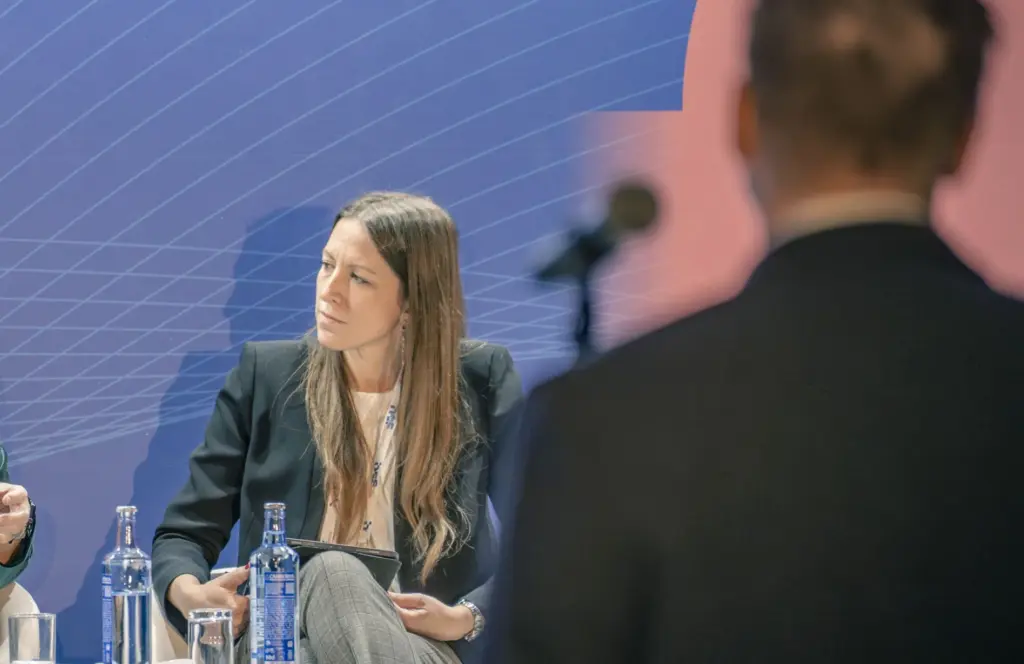
María de Oyarzabal, Head of Imaging and Advanced Therapies at Siemens Healthineers, reframed the challenge around a single resource: time.
Presenting principles for a sustainable workforce – redesigning capacity rather than simply filling vacancies, organizing around the patient journey, and empowering clinicians as change agents, she offered a vivid example. At Hospital Vall d’Hebron, a stroke “one-step room” that combines diagnosis and treatment in a single space cut door-to-groin time from 70 minutes to 36, roughly doubling a patient’s chance of recovery. In a separate lung-cancer screening pilot, AI pre-reports findings and prioritizes urgent cases, handing radiologists their time back. Her point: AI earns its place when it protects and optimizes clinicians’ time, not when it simply adds another screen.
Redefining the Roles of Humans and Machines
Avi Tsur of Sheba Medical Center showed what a redesigned service looks like in practice, describing a reimagined antepartum unit for high-risk pregnancies. Combining home monitoring with periodic hospital visits, his team delivers intensive care remotely: using conversational AI to replace routine midwife calls, AI to confirm normal fetal heart rates, and plain-language AI-generated notes to help patients understand their own care. Maternal and fetal “digital twins” predict deterioration days in advance, enabling proactive intervention. The result: better outcomes for sicker patients, without keeping them in a hospital bed.
Teaching an Entire Organization to Use AI
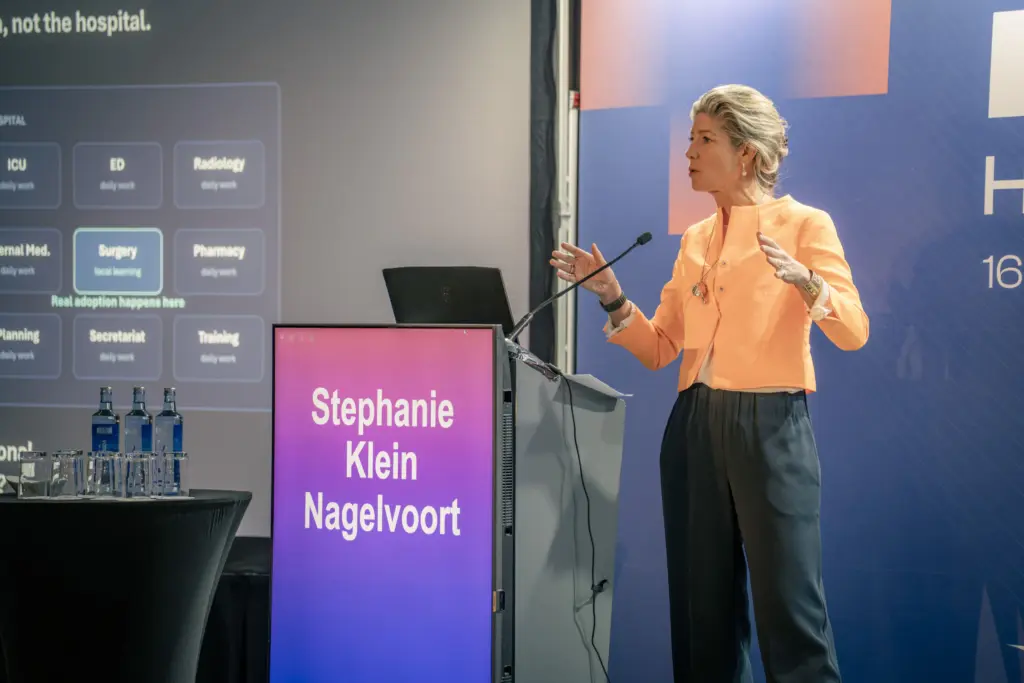
Perhaps the session’s most practical warnings came from Stephanie Klein Nagelvoort Schuit, Vice Chair of the Board at UMC Groningen and Professor of Future Healthcare at the University of Groningen.
She cautioned against a widening gap between a small group of AI innovators and the majority of staff – a gap that may not show immediately but erodes quality and equity over time. Her remedies were concrete: design AI education at the team level, with a designated “AI professional” embedded in each team; train leadership, not just frontline staff; and give the majority safe, sanctioned tools (UMCG built its own internal ChatGPT) so they don’t turn to unvetted consumer apps. She closed on a subtler danger, cognitive de-skilling, urging hospitals to consciously protect the instinctive clinical skills that over-reliance on AI can quietly erode.
Why Ethics Can’t Be Bolted On Afterwards
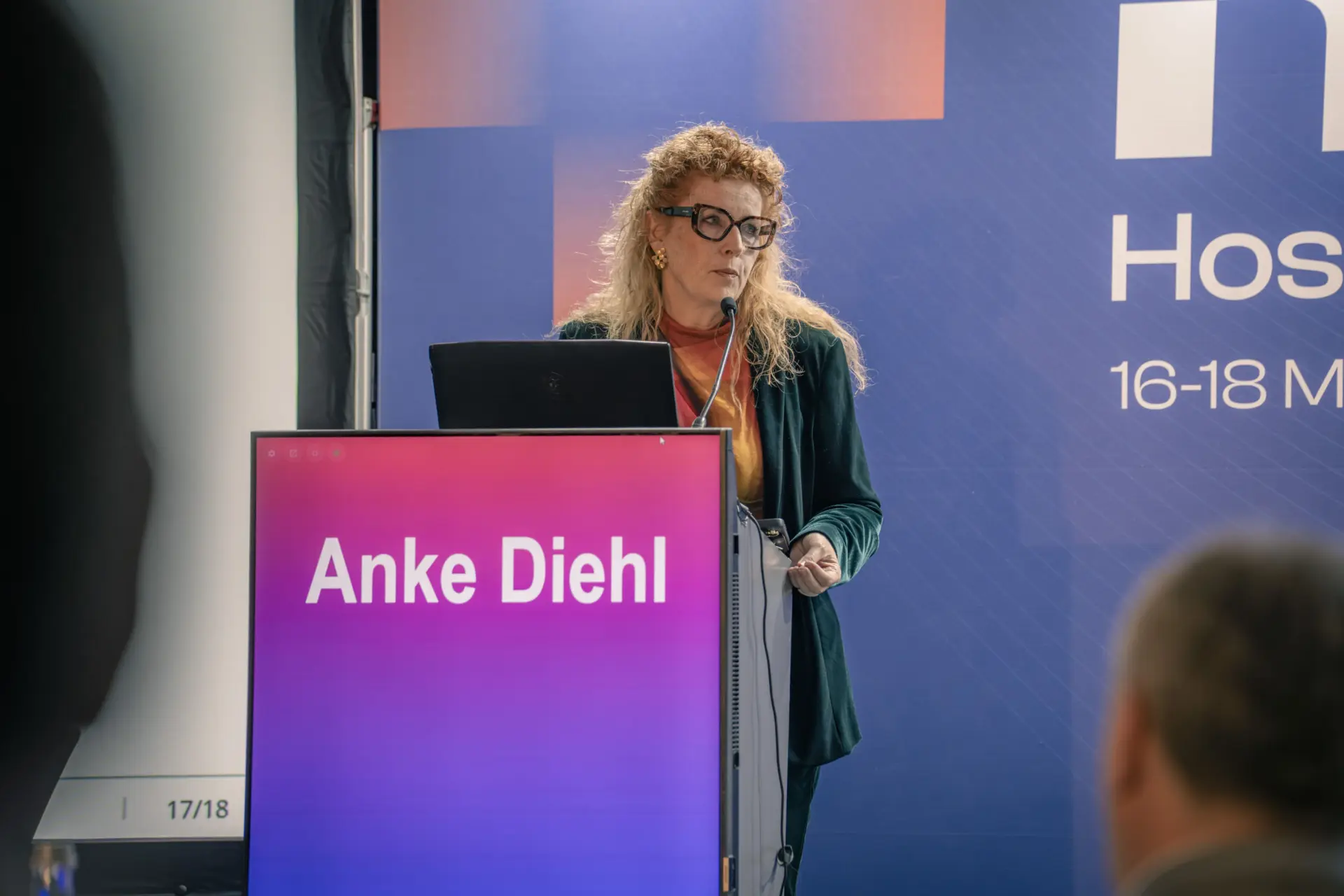
Anke Diehl, Chief Transformation Officer at University Medicine Essen, made the case that responsible AI is a design principle, not a compliance step. Her EURATE framework, grounded in European values and aligned with the EU AI Act, embeds ethics across the entire AI lifecycle — from stakeholder consensus at the outset, to multidisciplinary “system owners,” to multi-dimensional validation spanning technical, clinical, usability, regulatory, and ethical checks, to continuous monitoring for model drift. Rather than treating Europe’s regulatory rigour as a brake, she reframed it as a competitive advantage: the ability to pair technical capability with trust.
The Takeaway
The future workforce, this session made clear, will be defined less by headcount than by design. The hospitals that thrive will be the ones that redesign roles around AI rather than bolting it on, that teach every team – not just the enthusiasts, to use it well, that protect both clinicians’ time and their instincts, and that build ethics in from the first line of code.
Recruitment campaigns treat the symptom. Redesigning the work itself is the cure.
Want to stay informed about the ideas shaping the future of healthcare leadership? Subscribe to our newsletter and be the first to hear about insights, speaker announcements, and updates from the next Hospital C-Suite Summit.
Share this article on Social Media: