Share this article on Social Media:
At the Hospital C-Suite Summit 2026, one idea quietly upended the usual business case for artificial intelligence.
Again and again, leaders reported that AI’s greatest value wasn’t saving money – it was doing things that were simply impossible before. Reaching patients no one had the staff to call. Closing gaps no one had time to close. The lesson, drawn from across the program, was that the winning question isn’t “what can we cut?” but “what can we finally do?”
Ask most executives to justify an AI investment and they’ll reach for a familiar word: efficiency. Fewer hours, lower costs, leaner operations. But across several sessions at the Hospital C-Suite Summit 2026, a more compelling case emerged – the biggest returns came from abundance, not austerity.
The “Infinite Pilot”
The clearest articulation came from Roxanna Gapstur, President and CEO WellSpan Health, working with Munjal Shah, Co-Founder and CEO Hippocratic AI, who deployed conversational AI agents to handle patient calls at scale.
The efficiency use cases, automating tasks a human already did, delivered predictable savings. But the breakthrough came from what they called abundance use cases: tasks that were previously impossible because no workforce could staff them. When an AI agent delivered a normal mammogram result, it could also book next year’s appointment on the same call, lifting screening rates. Ahead of a heat wave, the same technology ran mass outreach to vulnerable patients, arranging transport to cooling centers – an intervention no human call center could have executed in time. Native-language empathy mattered too: Spanish-language outreach for colorectal screening achieved 2.5 times the response rate of English.
The surprise wasn’t just the impact. It was the acceptance – from clinicians who expected to resist, and from patients who rated the AI agents highly. And the strategic insight was counterintuitive: the value lay in expanding access and utilization, not in reducing headcount.

The Same Pattern, Everywhere
Once you notice the abundance logic, it appears across the Summit.
In the opening session, Galia Barkai, Director of Sheba BEYOND at Sheba Medical Center, described a virtual hospital delivering “care without an address” — remote cardiac rehabilitation and high-risk pregnancy monitoring that extend care to patients who might otherwise go without, rather than simply trimming the cost of a bed.
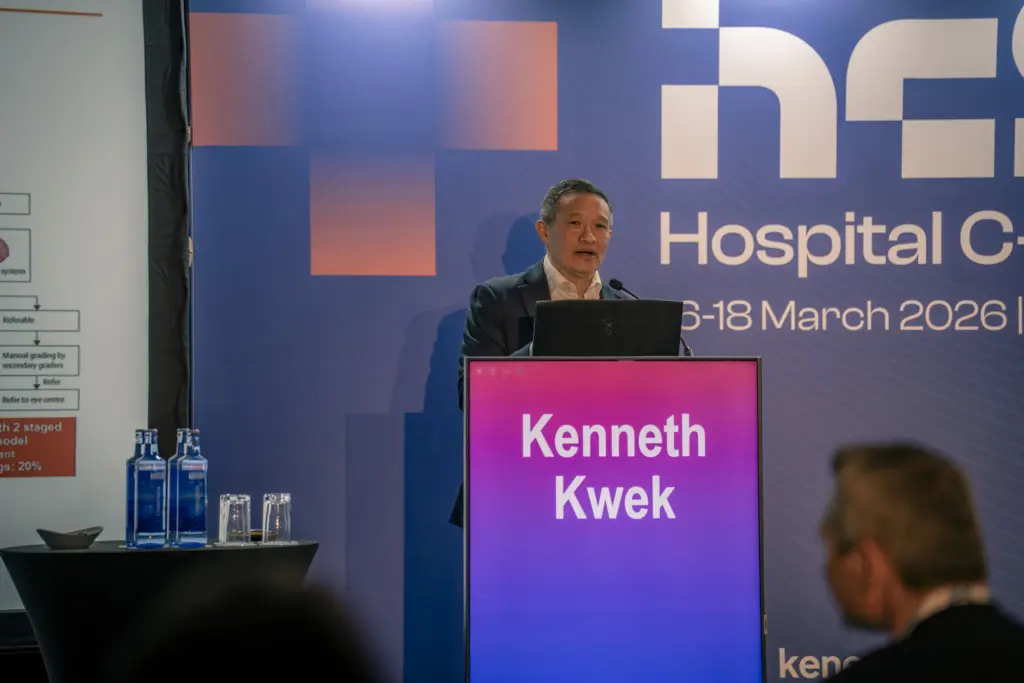
Also in Session 1, Kenneth Kwek, Deputy Group CEO for Digital and Future Health at SingHealth, framed his national PULSE strategy around outcomes that go well beyond efficiency — clinical quality, patient experience, research impact, and workforce wellbeing. AI, in that model, must improve healthcare, not merely streamline it.
And in the workforce session, Anna van Poucke offered the theoretical backbone: because productivity gains in healthcare tend to raise quality and expectations rather than cut workload, leaders who bank only on cost savings will be disappointed. The organizations that thrive will use AI’s new capacity to deliver care that was previously out of reach.
Why This Reframing Matters
The abundance lens changes how leaders should evaluate AI. A cost-savings business case measures success by what disappears – hours, roles, spend. An abundance business case measures it by what appears, screenings completed, patients reached, gaps closed, access widened.
That distinction has real consequences. It shifts AI from a threat to the workforce toward a multiplier of it. It reframes ROI around utilization and outcomes rather than pure efficiency. And it aligns the technology with the mission most hospitals actually hold: not to do less, but to care for more.
The Takeaway
The hospitals getting the most from AI at HC-S 2026 weren’t the ones chasing the deepest cuts. They were the ones asking what became possible once a machine could make ten thousand calls, monitor a patient at home, or reach a community in a language it understands.
Austerity shrinks the mission. Abundance expands it. And the leaders who understand the difference are the ones turning AI from a cost line into a reason patients get care they otherwise wouldn’t.
Want to stay informed about the ideas shaping the future of healthcare leadership? Subscribe to our newsletter and be the first to hear about insights, speaker announcements, and updates from the next Hospital C-Suite Summit.
Share this article on Social Media: