Share this article on Social Media:
At the Hospital C-Suite Summit 2026, one question dominated the conversation: not whether AI belongs in healthcare, but how to turn bold strategies into meaningful outcomes. From virtual hospitals and predictive analytics to workforce transformation and precision medicine, hospital leaders shared what it really takes to move AI from boardroom vision to clinical reality.
Healthcare leaders no longer need convincing that artificial intelligence will transform the industry. The challenge now is far more practical: how do you move from ambition to execution?
That question set the stage for the opening session of the Hospital C-Suite Summit 2026, “Digital & AI Transformation: From Strategy to Practice.” Bringing together health system executives, technology leaders, innovators, and policymakers from across Europe, Asia, and North America, the discussion focused less on future possibilities and more on what is already working today.
If there was one thing the leaders in the room agreed on, it was this: the technology is rarely the hard part. AI’s success depends on leadership, culture, governance, and the ability to embed innovation into everyday clinical practice.
Healthcare’s Challenges Won’t Wait. Neither Can Transformation.
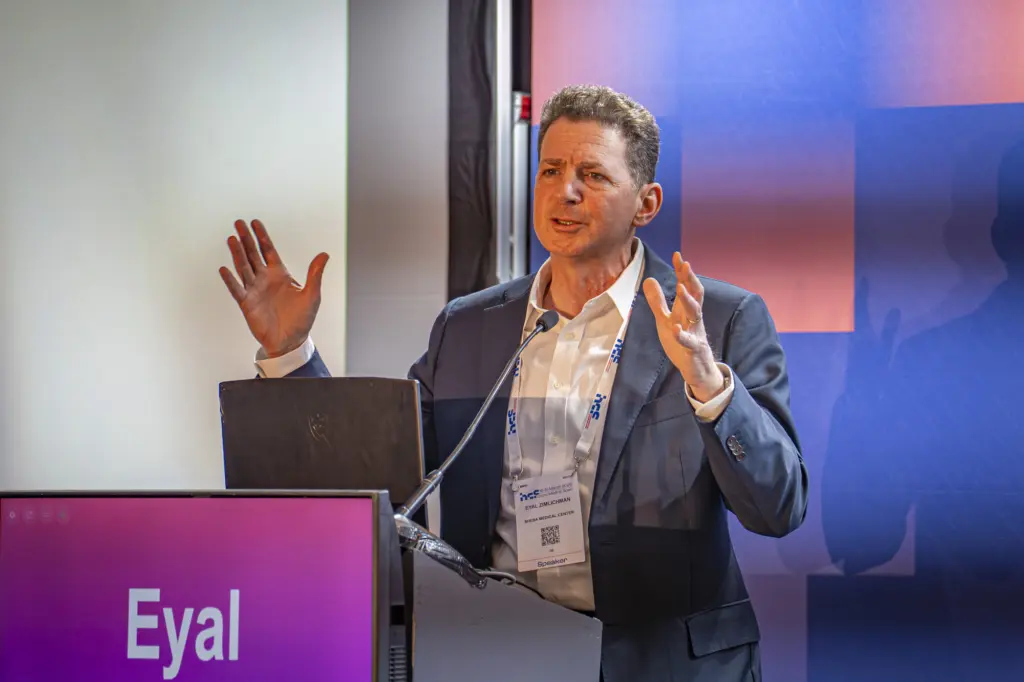
Opening the session, Eyal Zimlichman, Chief Innovation, Transformation & AI Officer and founder of ARC at Sheba Medical Center, painted a stark picture of the pressures facing healthcare systems worldwide.
Ageing populations, growing demand, workforce shortages, constrained budgets, and increasing global uncertainty are creating a perfect storm for hospitals. Incremental improvements, he argued, will no longer be enough.
Instead, healthcare leaders must rethink how care is delivered through five key transformation pathways: improving decision-making, redesigning professional roles, expanding access beyond geographical boundaries, accelerating precision medicine, and empowering patients to play a more active role in their health. Connecting all five, he suggested, is AI.
Rather than replacing clinicians, AI offers the opportunity to strengthen healthcare’s most valuable resource: people.
There Is No Single AI Playbook
If the session challenged one common misconception, it was the idea that successful AI adoption follows a universal roadmap.
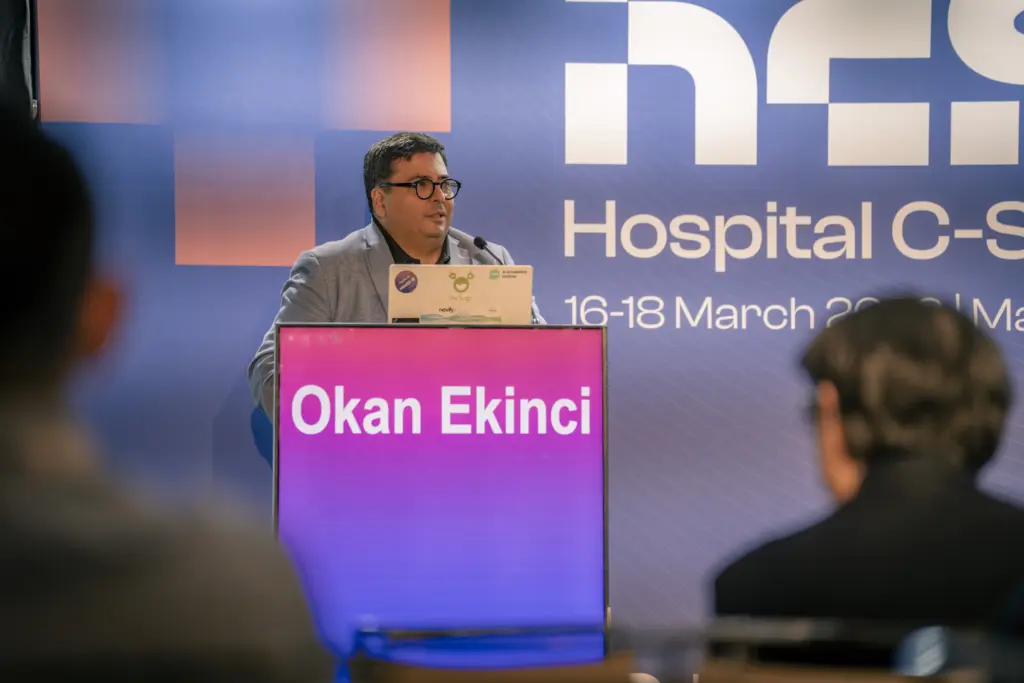
Okan Ekinci, Roche Information Solutions, highlighted the growing spectrum of approaches available to healthcare organisations. Some focus on targeted AI initiatives that solve specific operational challenges. Others build enterprise-wide platforms designed to support multiple use cases. A smaller number are already redesigning entire operating models around an AI-first mindset.
The danger, he warned, lies at both extremes. Small pilots frequently fail to scale, while organisation-wide transformation programmes can become overwhelming if they lack flexibility. The most successful organisations strike a balance: enabling local innovation while building the infrastructure, skills, and governance needed to scale what works.
The frameworks on display differed in shape, but the ingredients recurred: governance, workforce upskilling, and the discipline to ensure AI removes administrative burden rather than adding to it.
What Enterprise-Scale AI Looks Like
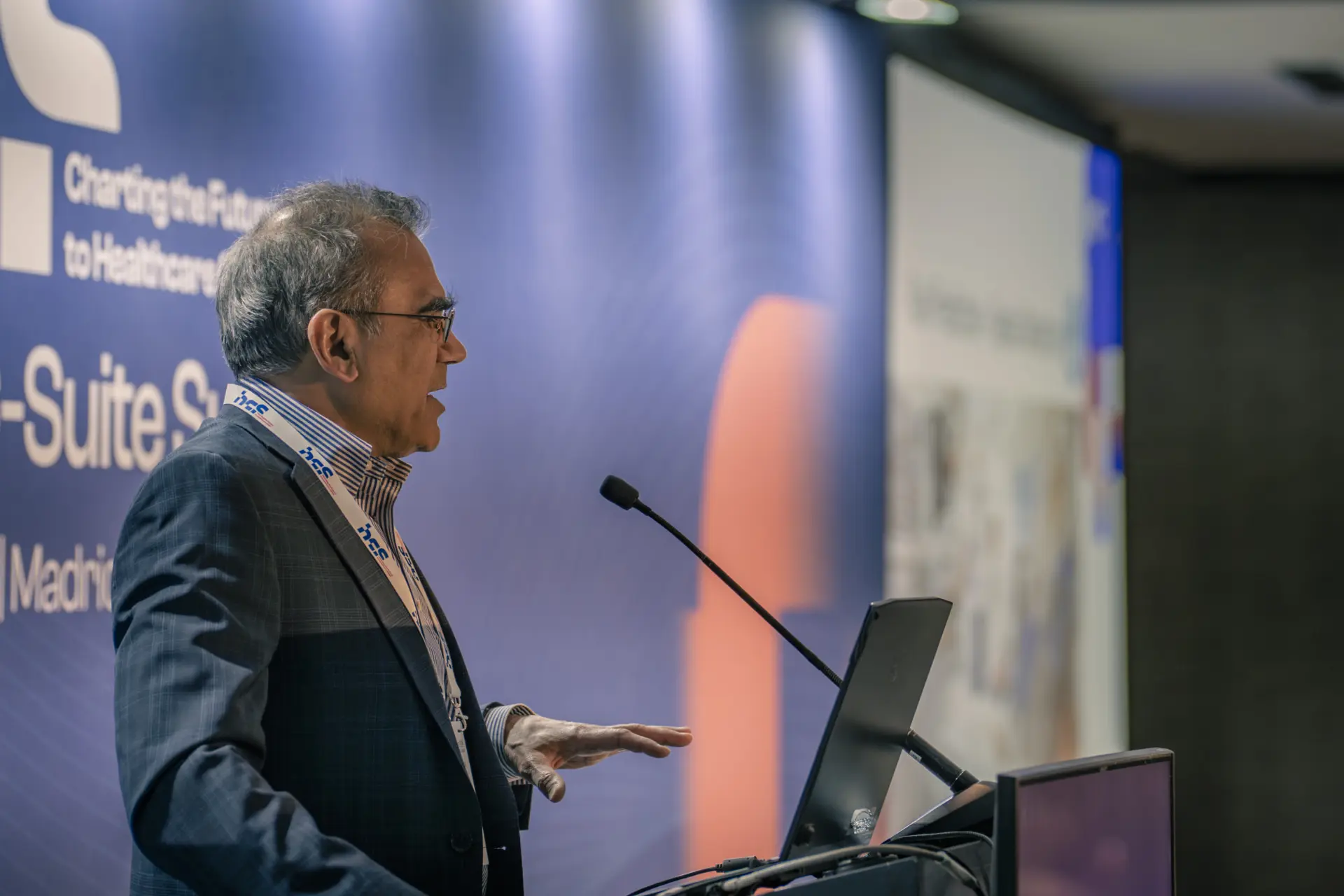
Rohit Chandra, Executive Vice President and Chief Digital Officer at Cleveland Clinic, shared lessons learned from deploying AI across one of the world’s most recognized health systems.
The examples were tangible and varied: predictive algorithms supporting early sepsis detection, ambient AI documentation tools reducing clinician workload, advanced workforce planning solutions optimizing nurse staffing and operating room schedules, and automated coding systems improving consistency while reducing administrative effort.
Yet the technology itself was not presented as the primary success factor. Instead, Chandra emphasized the principles that have guided Cleveland Clinic’s approach: focus on high-impact problems, ensure the technology is mature enough for deployment, proactively address risk, build strong partnerships, and treat change management as a critical success factor rather than an afterthought.
The message was simple: AI implementation is ultimately a people transformation project.
From Innovation to Measurable Outcomes
That focus on outcomes continued throughout the AI-in-Hospitals panel.
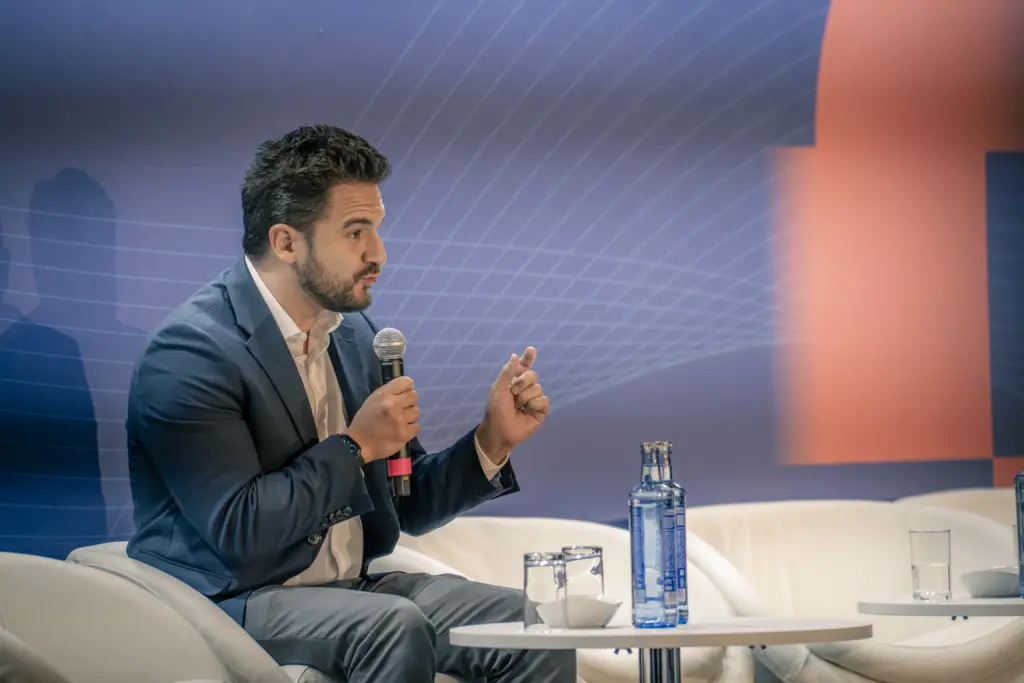
Prof. Heyo Kroemer, CEO of Charité – Universitätsmedizin Berlin, discussed Germany’s demographic challenges and the role AI is already playing in supporting acute care prioritization and operational efficiency.
Meanwhile, Elad Walach, CEO of Aidoc, described how AI embedded directly into clinical workflows has contributed to improvements in stroke care pathways. His key argument resonated throughout the session: success comes not from standalone solutions, but from integrating AI into the daily decisions clinicians already make.
The distinction may sound subtle, but it is critical. Healthcare organizations are moving beyond experimentation and asking a new question: can AI consistently improve patient outcomes at scale? The leaders on stage suggested the answer is yes – provided implementation is approached strategically.
Why the Future of Healthcare May Not Have an Address
One of the session’s most compelling visions of the future came from Galia Barkai, Director of Sheba BEYOND at Sheba Medical Center.
Her presentation challenged one of healthcare’s oldest assumptions: that care must take place inside a hospital. Through virtual care models, remote cardiac rehabilitation, high-risk pregnancy monitoring, wearable technologies, tele-ultrasound, and AI-powered decision support, Sheba is expanding the hospital beyond its physical walls.
The goal is not to replace hospitals, but to ensure patients receive the right care in the right place – often without needing to travel at all. The concept, described as “care without an address,” reflects a broader shift taking place across healthcare systems globally.
Building AI at National Scale
While many organizations are still evaluating pilot projects, Singapore’s SingHealth is already demonstrating what system-wide AI adoption can look like.
Kenneth Kwek, Deputy Group CEO for Digital and Future Health, outlined the organization’s PULSE framework: Platforms, Upskilling, Lean Processes, Strategic Partnerships, and Ethical Governance. The framework supports a coordinated strategy built on unified digital infrastructure, advanced data capabilities, and AI-powered tools that serve both clinicians and patients.
Importantly, success is measured through more than efficiency alone. Clinical quality, patient experience, research impact, and workforce wellbeing all play a role. In other words, AI must improve healthcare, not simply streamline it.
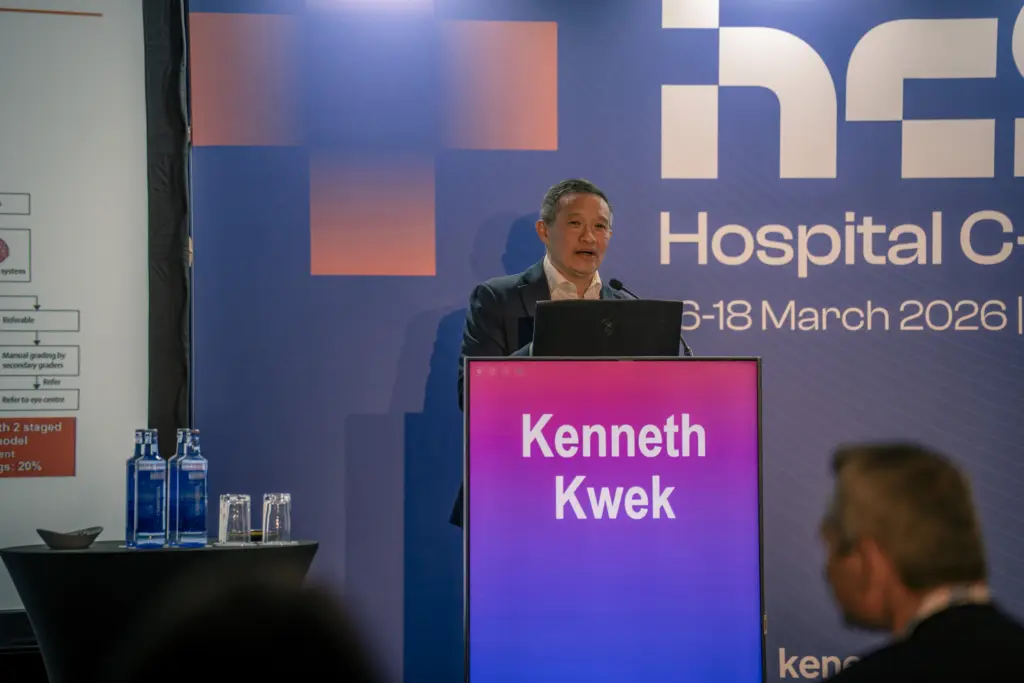
The Next Frontier: Precision Medicine and Intelligent Platforms
Looking ahead, several emerging technologies hinted at where healthcare innovation is headed next – from AI-driven drug discovery powered by massive immune-cell datasets to automated clinical trial recruitment embedded directly into electronic health record workflows.
Yet despite the complexity of the technologies on display, the discussion repeatedly returned to the same principle: technology must solve real clinical problems. Innovation for its own sake is no longer enough.
The Real Measure of Success
The session concluded with a candid discussion of the barriers that continue to challenge healthcare organizations worldwide, including interoperability, data quality, privacy regulation, and governance.
But perhaps the most important lesson centered on how success should be measured. AI’s return on investment, leaders argued, cannot be evaluated through financial metrics alone. Clinician satisfaction, workforce resilience, reduced burnout, patient outcomes, and care quality must all form part of the equation.
Because when AI helps clinicians spend less time on administration and more time caring for patients, everyone benefits.
The Takeaway
The future of AI in healthcare is no longer theoretical. From virtual hospitals in Israel and enterprise-wide deployments in the United States to national-scale transformation in Singapore, leading health systems are already demonstrating what successful implementation looks like.
Their experiences point to a common conclusion: strategy may define the vision, but execution determines the outcome. The organizations making the greatest progress are not treating AI as a standalone technology initiative. They are embedding it into workflows, investing in people, measuring meaningful outcomes, and building innovation around genuine clinical needs.
The debate has moved beyond whether AI belongs in healthcare. The real challenge – and opportunity – is putting it into practice.
The real challenge, and opportunity, is putting it into practice.
Want to stay informed about the ideas shaping the future of healthcare leadership? Subscribe to our newsletter and be the first to hear about insights, speaker announcements, and updates from the next Hospital C-Suite Summit.
Share this article on Social Media: